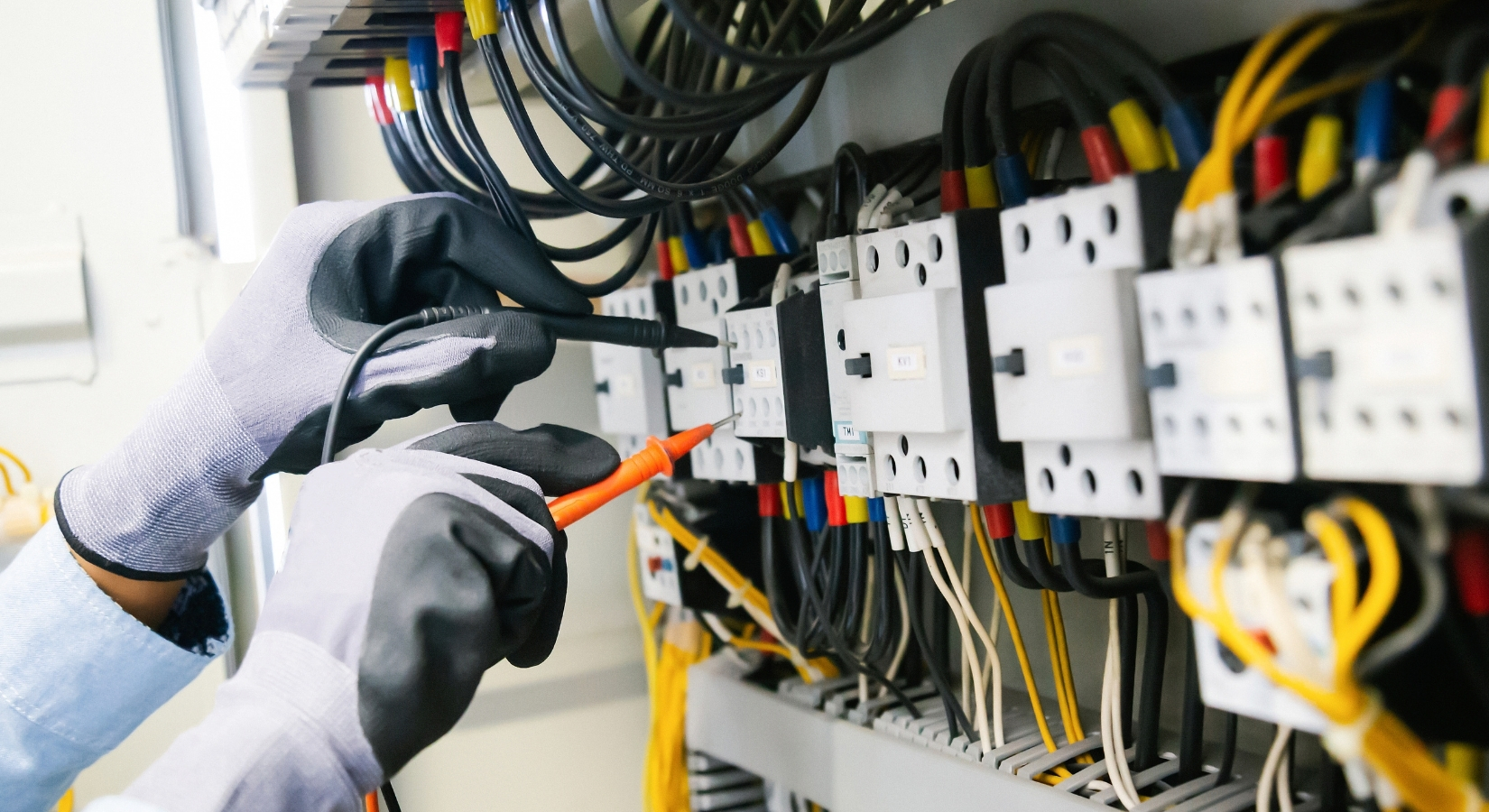
Electrician working on a large industrial electrical panel.

INSIGHT #5 · TRADE-SPECIFIC

Last to the meeting. Last to the pad. Last to the software.

Electrical fabrication tracking: the missing piece. Electricians spend real money on coordination — then still show up last on site. That's not a law of nature. That's a gap in the tools.

Written by ArciFab · July 15, 2026

Sit through enough coordination meetings on a big commercial or industrial job and you'll notice the pattern before anyone says it out loud. Mechanical presents first. Sheet metal walks through their routing. Plumbing gets its slot. And electrical sits at the end of the table, waiting for everyone else to finish claiming the ceiling space before they can even finalize where the conduit racks go — on a system that, unlike a rigid duct run or a sloped pipe, can actually move around almost anything in the room.

Then the job hits the floor, and the pattern repeats. Mechanical spools ship. Duct packages stage. And electrical is still back at the shop trying to figure out which prefab rack goes out next, because the tracking system everyone bought was built for spools and duct, and electrical got whatever was left over — usually a job number and a due date, and nothing that actually understands a pull sheet.

Conduit is the one system on the floor that can actually move out of everyone else's way. And it's still the last one out the door.

That's not a law of nature. It's not because electrical work is simple — ask anyone who's chased a mislabeled panel schedule at 6 p.m. how simple it is. It's because the industry has spent two decades building fabrication tracking for pipe and duct, treating electrical as the trade that'll figure it out with a spreadsheet and a strong back. It's time somebody said that part out loud, and then actually fixed it.


Its own logic, not an afterthought

Conduit, wire, and gear don't run on a job number

A pipe shop tracks spools and heat numbers. A sheet metal shop tracks lbs/hour and nesting yield. Electrical runs on its own set of realities, and most fabrication platforms have never bothered to learn them: EMT, IMC, and RMC each bend and terminate differently, and a rack that mixes conduit types isn't the same fabrication task as one that doesn't. Offsets and bends have to match field conditions that shift the moment another trade's routing changes — which, given electrical goes in last, is often.

Then there's everything downstream of the conduit itself: wire and cable pulls that have to match a cut list before anyone touches a fish tape, terminations that need QC the same way a weld does, prefab racks, skids, and gear assemblies that are their own fabrication project, not a line item on someone else's traveler. And the bill of materials isn't one list — it has to work by circuit, by panel, and by room, because that's how an electrical package actually gets installed.

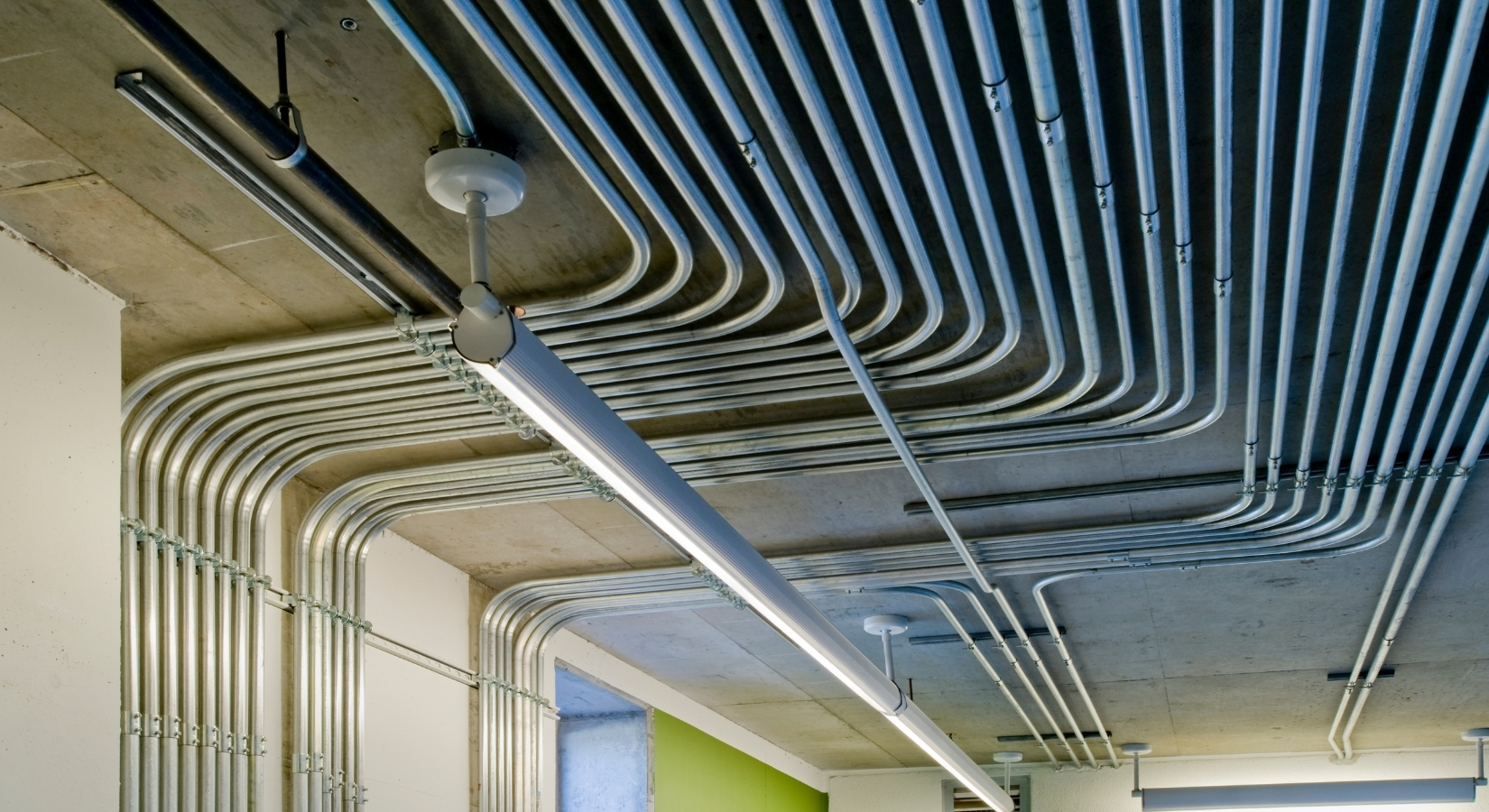
Electrical conduit and fabrication work in the shop.
EMT, IMC, RMC — different jobs, not one generic "conduit" status.

The tools that exist today

A thin, honest look at what's actually out there

This isn't a category with no options. It's a category where the options rarely go as deep as electrical shops actually need.

Stratus markets an electrical-specific tool built as a Revit plugin — automated feeder-schedule sync, conduit routing, and bend-sheet generation that publishes back into the model. That's real design-to-fabrication work on the drawing side, and it's the name most shops in this lane hear first.

Other big multi-trade names list an electrical product too — paperless shop tools, BIM tie-ins on paper. In practice, the electrical side tends to be light: a thin module on a system built pipe-first. It shows the moment a real electrical shop tries to run actual fab tracking through it. MSUITE and similar multi-trade platforms have almost zero utility for the electrician who needs to track a prefab rack from cut list to install sequence. Design-side helpers are not the same thing as shop-floor tracking.

General procurement and materials platforms — built for purchasing, receiving, and inventory across any trade — are honest about their limits. Some say outright they don't support prefabrication workflows. Useful for buying material. Not built to track a rack from cut list to install.

None of that makes electrical unservable. It makes it underserved — real tools for the drawing side, and almost nothing that follows a prefab assembly onto the floor, through QC, and out the door in install sequence.

Even where a tool works, it works the same way for every shop that buys it. One fixed workflow, one generic set of fields, built to serve as many tenants as possible off a single codebase. That's why ArciFab configures everything around the shop that's using it — instead of handing every electrical contractor the same fields and the same workaround.

Electricians on a large commercial or industrial job site.
Coordination money only pays off if the rack that left the shop matches the model that left the meeting.

The electrician pays for the coordination meeting and the clash detection software. Then ships out of a shop that's still tracking prefab racks the same way it tracked them twenty years ago.

Where the money actually goes

Coordination spend without a system to cash it in

Electrical contractors are not skipping the investment. Clash detection, BIM coordination, hours in meetings making sure conduit racks don't collide with a duct run or a sprinkler main — that's real time and real money. The waste isn't in the meeting. It's in what happens after it: all that upfront precision, and the shop still builds prefab racks off a cut list nobody's tracking against what's actually staged, still stuck figuring out load order by memory.

Every hour spent perfecting the model and none spent tracking whether the rack that model produced is actually complete, actually labeled, actually staged in the order the field needs it — that's coordination money that never turned into a site-day advantage. Conduit can move around almost anything in that room. It should be the trade walking onto the pad first, package in hand, not the one still explaining why the rack isn't ready.

Electrical prefab racks and conduit assemblies staged in the shop.
A rack is a fabrication project — not a line item on someone else's traveler.

Line by line

Why the electrician needs real fab tracking, not a leftover module

01

Conduit fab. Bends, offsets, and rack builds tracked as their own flow — EMT, IMC, and RMC handled as the different jobs they actually are.

02

Wire and pull readiness. Cut lists that match what's actually been pulled, so nobody finds out a wire run is short after the fish tape's already through.

03

Prefab assemblies. Racks, skids, and gear assemblies tracked as real fabrication projects, with their own BOM by circuit, by panel, by room.

04

Labeling and termination QC. A termination gets checked with the same discipline a weld does — because a mislabeled circuit is exactly as expensive once it's behind a wall.

05

Shop-to-field sequence. A load that goes out in the order the field installs it, built from what's genuinely complete — not whichever rack finished first.

This is exactly where ArciFab was built to stand. Not a mechanical or sheet metal template with an electrical tab bolted on, but a dedicated environment configured around real electrical prefab flow — cut list to fab to stage to delivery, tracked the way an electrical shop actually thinks about a panel, a circuit, a rack.

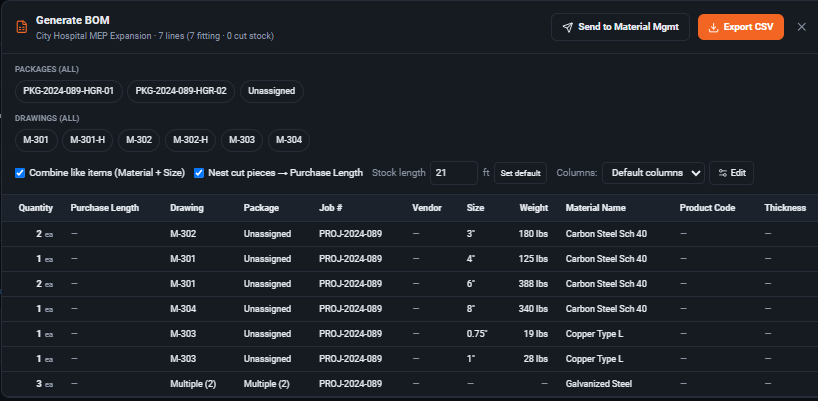
ArciFab bill of materials / electrical package view.
Package readiness by circuit and assembly — what's actually built, labeled, and ready to ship.

What changes

Monday morning, built for the electrician

01

Prefab racks and gear assemblies get tracked start to finish — the same rigor pipe and duct have had for years.

02

Wire pulls, cut lists, and terminations stay connected to the actual rack, so nobody discovers a gap after the panel's already staged.

03

The BOM works the way electrical actually thinks — by circuit, by panel, by room — instead of one flat parts list.

04

The truck loads in install sequence, with electrical staged and ready — first to the pad instead of last, for once.


The decision is simple

Bring us a real pull sheet. We'll show you what fits.

Bring a real pull sheet, a conduit rack, a prefab assembly, or the way you currently stage electrical packages — and we'll show you what a system built around that process looks like. No generic demo. No theoretical workflow.

(Financing link redirects to a third-party website)