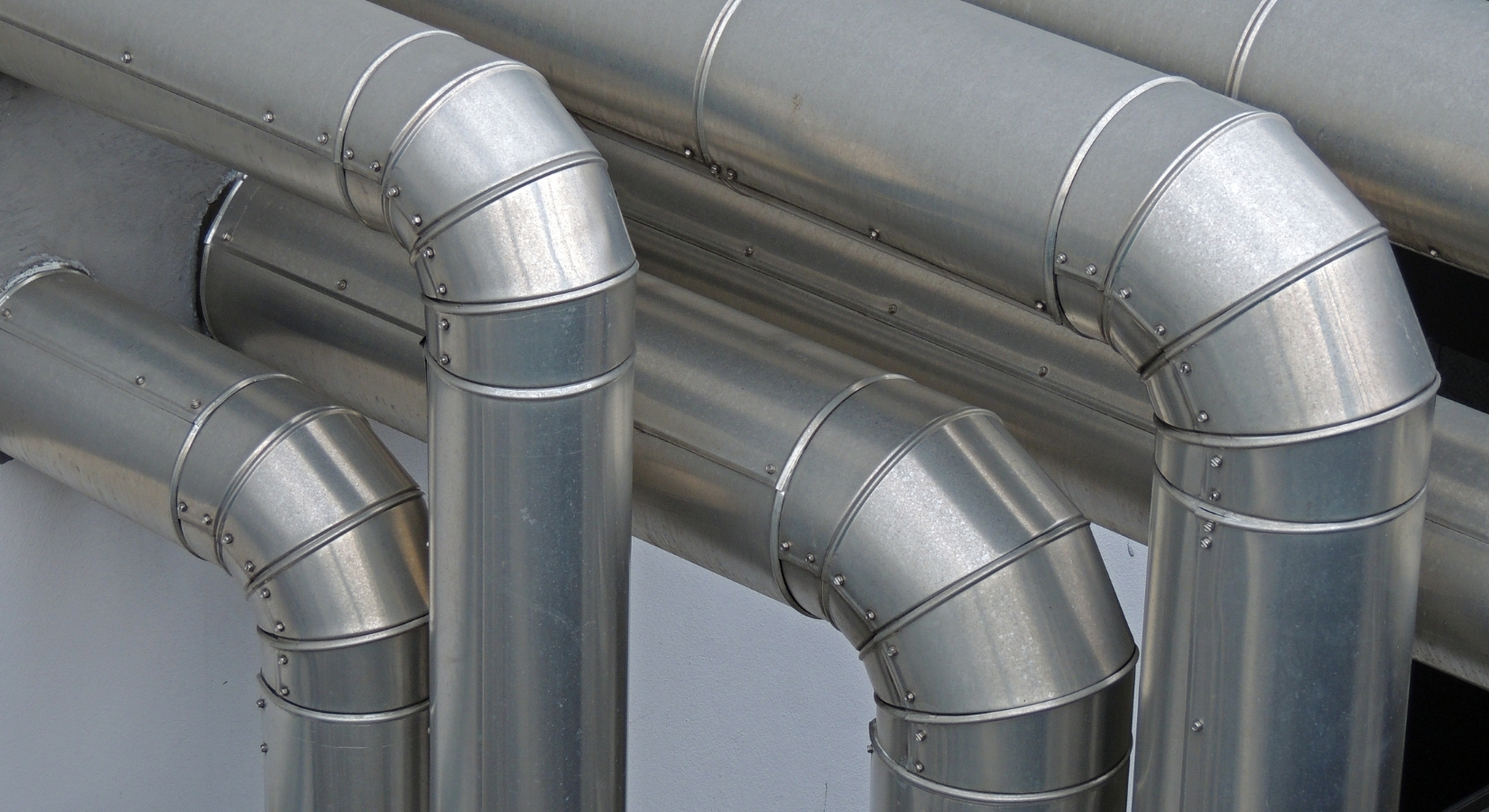
Finished sheet metal duct bends and fittings staged for installation.

INSIGHT #4 · TRADE-SPECIFIC

Sheet metal tracking built for real throughput.

Lbs/hour, nesting yield, coil vs. sheet, and the truck that leaves late. The dry side runs on its own logic — most systems still don't know that.

Written by ArciFab · July 8, 2026

The mechanical room package looked simple on paper: a run of long straight mains feeding a bank of AHUs, plus a dense cluster of transitions, offsets, and elbows squeezing past structural steel and two other trades' rough-in. Somebody scheduled the whole tonnage against the coil line, because the coil line's lbs/hour number was the fastest one the shop had, and the job needed to move.

Except a third of that tonnage was never coil-line work. Fitting-heavy, irregular, no business being formed off continuous stock. It sat queued behind the straight-run mains until someone caught it, and by then the plasma table had to be reprogrammed and the crew had to re-sequence a day they'd already planned around a duct run that wasn't actually next. The ship date for that AHU room didn't move. The schedule around it did — twice.
Nobody wrote "coil line" and "fitting-heavy" as the same kind of work. The schedule did that on its own, because the system only saw tonnage — not what kind.

That's the story almost every generic fab platform tells you, whether it says so or not: duct is duct, a pound is a pound, and a job number doesn't know the difference between a run that belongs on a coil line and one that never should have left sheet stock. Sheet metal isn't pipe with flat parts. It runs on its own logic, and most of the tools built for multi-trade shops were never taught what that logic is.


Its own logic, not pipe with flat parts

The dry side runs on throughput, not job status

A pipe shop measures itself in spools, heat numbers, and hold points. A sheet metal shop measures itself in lbs per hour — and that number isn't one thing. A shop running 24-gauge low-pressure galvanized duct by hand is looking at something in the neighborhood of 40–45 lbs/hr. Add a plasma table or coil line and that rate can roughly double. Add fitting-heavy, higher-pressure-class work, and it drops again, because elbows, transitions, and offsets don't move like straight duct, no matter what machine cut them.

Lbs/hour isn't a shop-wide constant. It's a moving target that depends on gauge, pressure class, and how much of the package is straight run versus fittings. A platform that tracks one throughput number for "duct" the same way it tracks one for "pipe" is going to be wrong in both directions — overcommitting the coil line, undercommitting the fabrication table, and leaving the actual bottleneck invisible until the schedule already slipped.

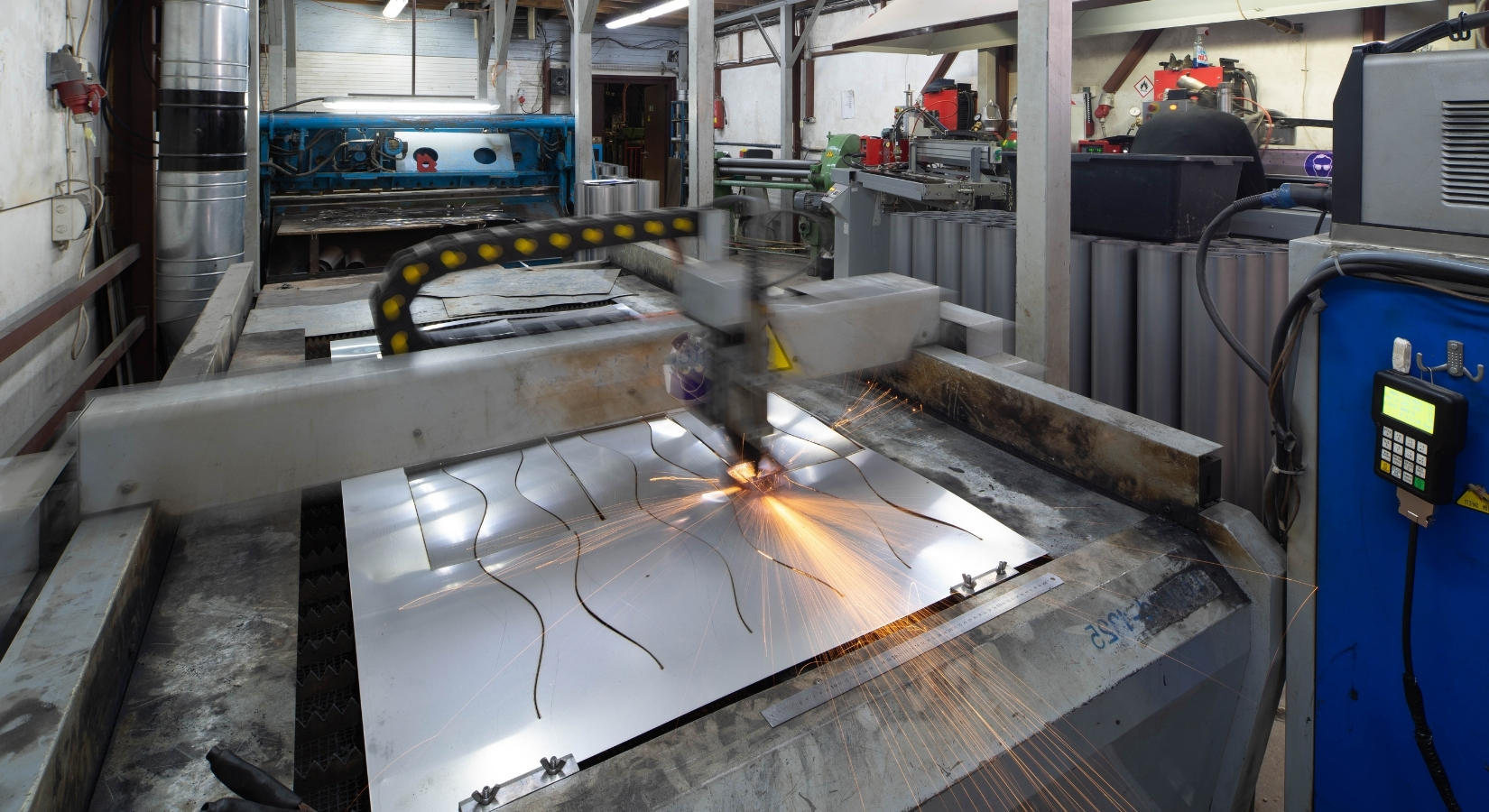
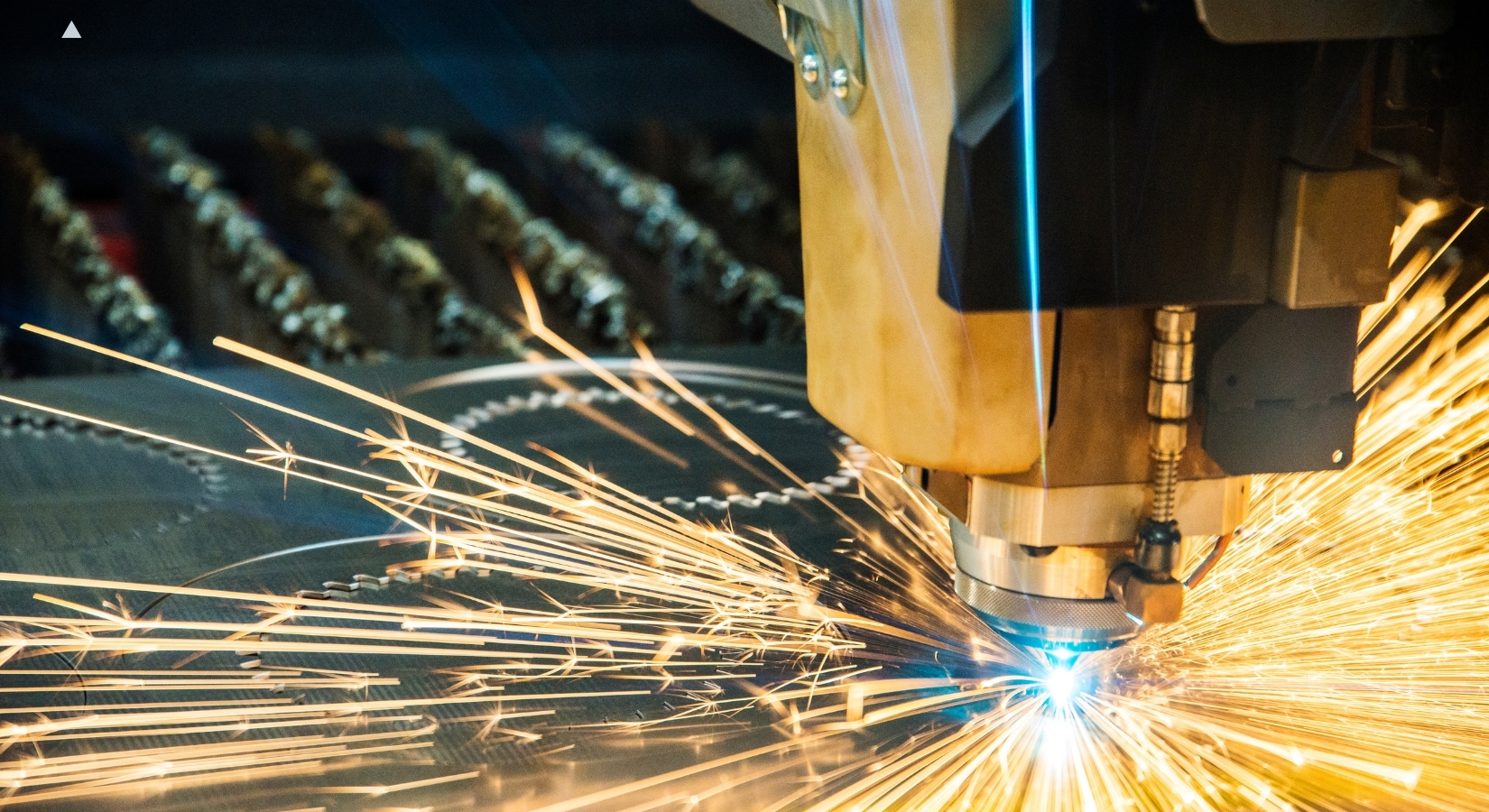
Plasma cutting sheet metal in a fabrication shop.
Plasma, coil line, or hand fab — the rate only means something when the system knows what kind of work is on the table.

Not just a spec sheet

Pressure class and seal class are operational facts

SMACNA pressure class and seal class aren't paperwork the engineer worries about and the shop ignores. They set the gauge, the reinforcement spacing, and which joints actually need sealant — Class A wants every transverse joint, every longitudinal seam, and every penetration sealed; Class C only needs the transverse joints. Get that classification disconnected from the piece as it moves through the shop, and you don't find out until the field either fails a leakage test or seals joints that never needed it, eating hours that should've gone somewhere else.

That classification has to travel with the part the same way a heat number travels with a pipe spool. When it lives on a drawing revision nobody re-checked instead of on the traveler in the fitter's hand, it's not a design problem anymore. It's a shop problem wearing a design problem's name.


Where the quiet money is

Nesting yield lies to you if you let it

Every programmer watches nesting yield — how full a sheet is when the cut's done. Fewer shops watch the number underneath it: manufacturing yield, which accounts for what actually happens to the drop. A nest can report a clean 90 percent yield and still be masking a shop running closer to 75 percent overall, because the remnants went straight to the scrap bin instead of back into production.

Coil versus sheet is the same kind of decision, made constantly and rarely reviewed. Coil line makes sense for volume and long straight runs; it does not make sense for fitting-heavy geometry. Every shop has a story about a job that got routed the wrong way because the system saw "duct" instead of the actual part mix. A shop that standardizes remnant sizes and tracks them back into inventory recovers real material. A shop that crops and stacks drop "for later" is running a scrap pile with extra steps.

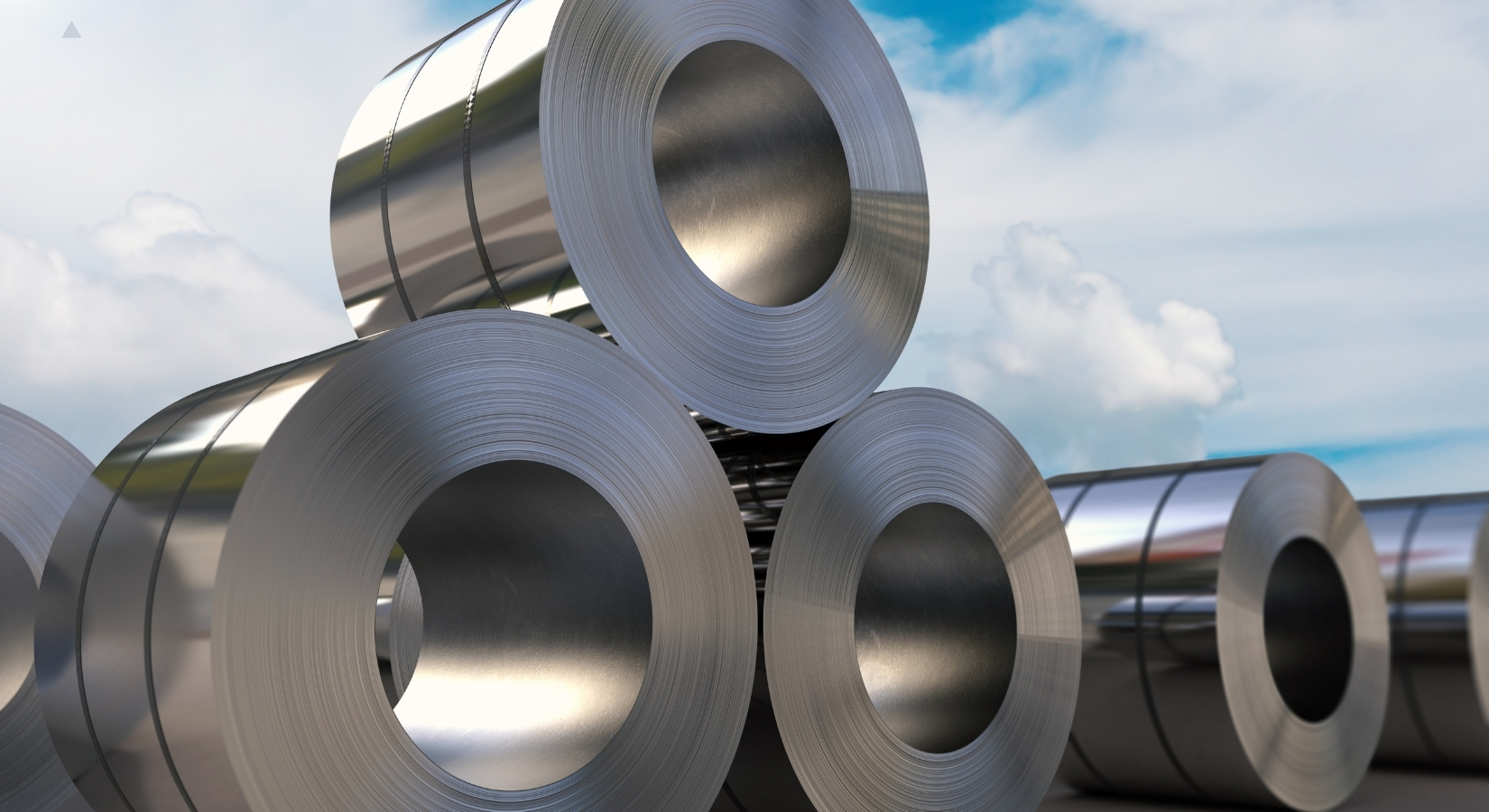
Sheet metal coil rolls staged in a fabrication shop.
Coil vs. sheet is a routing decision — not a tonnage decision.

A 90 percent nesting yield and a 75 percent manufacturing yield can be the same sheet. The difference is whether anyone was tracking what happened to the drop.

One motion, not five status fields

Cut sheet, fabricate, stage, deliver — it's one line

Plasma or laser cuts the blank. It moves to beading, seaming, lockforming, or the coil line depending on what it is. Liner goes in if the piece needs it. Dampers, flex connections, and hangers get tracked as their own line items — not as an afterthought bolted onto the duct's status. Then it stages for a load that matches how the field is going to install it: which piece goes up first, not which piece finished cutting first.

Generic platforms treat each of those as a separate status field tied to the same job number. On the floor, they're one motion. The real cost shows up in the handoffs: a package that's "complete" by the system but missing the damper that was supposed to ship with it, a liner step skipped because nobody flagged the piece before staging, a load built the night before by someone who knows the yard but not the install sequence. None of that shows up as a defect. It shows up as a callback, a partial load, or a crew waiting on the piece that should have been on the truck.

Sheet metal fabrication table and formed duct work.
From blank to package — the handoffs are where generic status fields fall apart.

What the nest file says vs. what's true

CAM output and shop-floor truth are two different things

A CAM program can tell you exactly how long a nest should take to cut. It has no idea how long the sheet sat waiting to be loaded, how long parts sat waiting to be sorted off the table, or how much of the shift went to changeover instead of cutting. That gap — between programmed cycle time and real machine utilization — is where a lot of "we're behind schedule" actually lives. A system that only reads the CAM file never sees it, because it was never designed to watch the floor, only the file.

Where this turns

Built for cut sheets to delivery, not job status

This is the piece ArciFab was built to solve. Not another multi-trade platform with a "sheet metal module" bolted on — a dedicated environment configured around dry-side reality: lbs/hour that reflects gauge and pressure class instead of a single shop-wide number, nesting and manufacturing yield tracked as two different truths, coil-versus-sheet routing that follows the part mix instead of the tonnage total, and a package view that carries liner, dampers, and accessories as real line items instead of afterthoughts.

Cut sheet to fabricate to stage to deliver stays one connected line — the way it actually runs on your floor — so a load builds around what's genuinely complete and in the right install sequence, not around what looked done at the end of a shift.

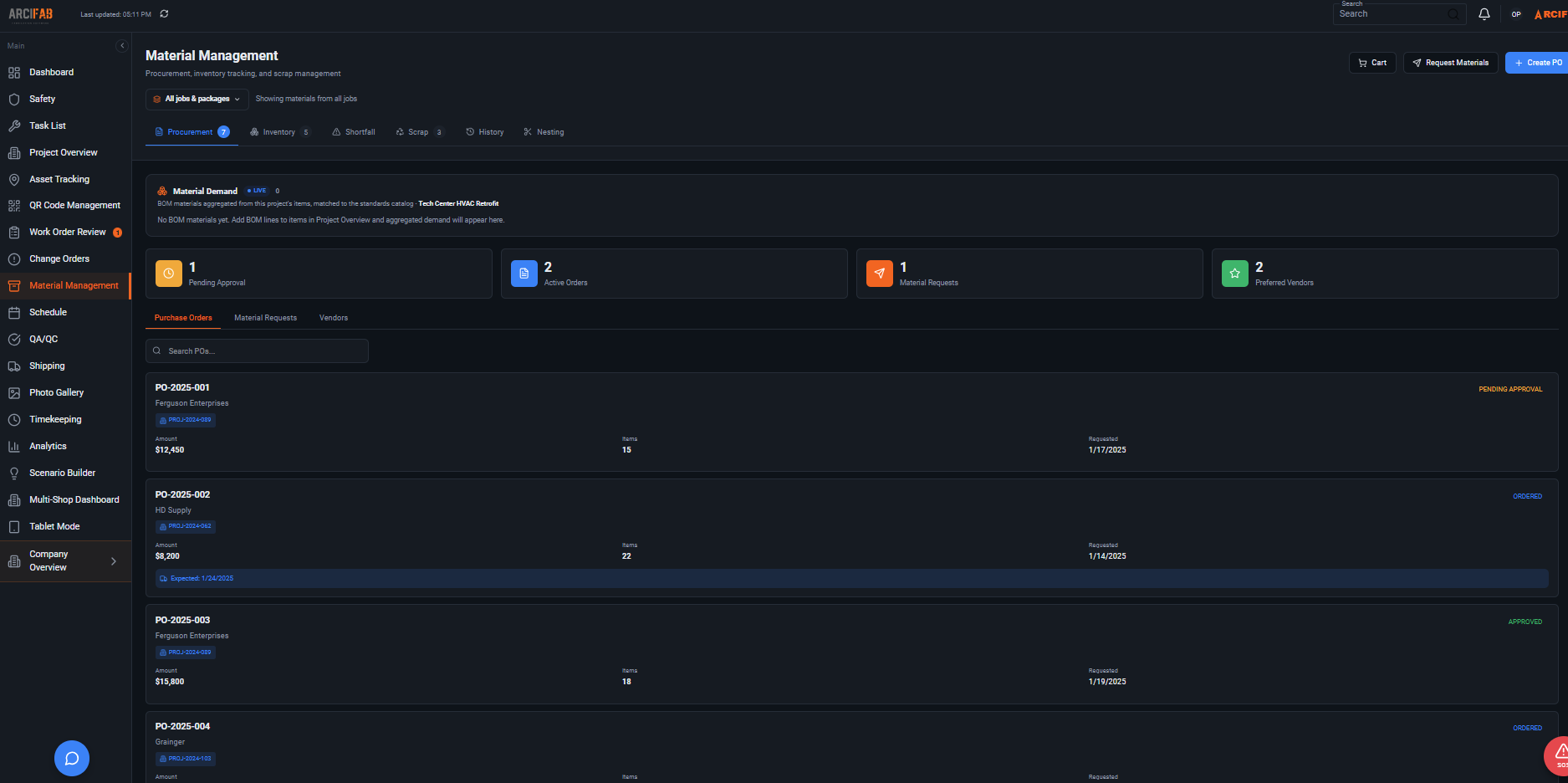
ArciFab material and sheet metal package view.
Yield, gauge, pressure class, and package readiness in one view — not five separate screens.

A thin field, not a feature war

Very few platforms even try this depth

This isn't a crowded category. Most multi-trade fabrication software treats duct as a job type with a checklist attached — not a process with its own throughput logic, yield math, and package-readiness rules. There's one platform shops in this lane mention more than any other when the conversation turns to dry-side depth, and it's earned that reputation. But "the one shops mention" and "built specifically around your coil-versus-sheet reality, your gauge mix, your fitting ratio" are two different bars. Fit matters more than a feature list here, because the shops that run high-mix duct work know the difference the first week they use a system that wasn't built for it.


A note on machines

PypeServer does the heavy lift on the machine side. We do the heavy lift on yours.

Most fabrication platforms stop at the file they hand off to a machine. They have no idea what the coil line or the CNC table actually did with it. PypeServer is the real exception — direct integration with coil lines, CNC tables, and profilers, pulling actual machine-level activity back out instead of just pushing a program in. ArciFab partners with PypeServer so that real cutting and forming activity flows back into your shop's own environment, not a generic dashboard bolted on top of it.

PypeServer moves the needle on the machine floor. ArciFab moves it on the admin side — the hours a shop manager spends reconciling what the machine actually cut against what the traveler says, chasing which package got which yield, rebuilding a report by hand because the system's reporting doesn't cover it. Pairing real machine data with an environment built around your workflow doesn't just make the floor faster. It gives the person running the shop hours back in their own day.

What changes

Monday morning, built for the dry side

01

The coil line and the fabrication table get scheduled by part mix, not tonnage — so a fitting-heavy package never queues behind a straight run it was never suited to follow.

02

Manufacturing yield, not just nesting yield, is the number leadership actually sees — so remnants either get used or get counted, instead of quietly becoming scrap.

03

Pressure class and seal class travel with the part from cut sheet to install, so the field isn't the first place anyone finds out a joint needed sealing that never got it.

04

A load builds from what's genuinely complete — liner, dampers, accessories included — staged in the order the field needs it, not the order it finished cutting.

05

The shop manager stops losing hours to reconciliation and hand-built reports — because the system already knows what the machine actually did, not just what it was supposed to do.


The decision is simple

Bring us a real nest. We'll show you what fits.

Bring a real nest, a duct run, a cut sheet, or the way you currently measure lbs/hour and stage packages — and we'll show you what a system built around that actual process looks like. No generic demo. No theoretical workflow.

(Financing link redirects to a third-party website)